Product details description
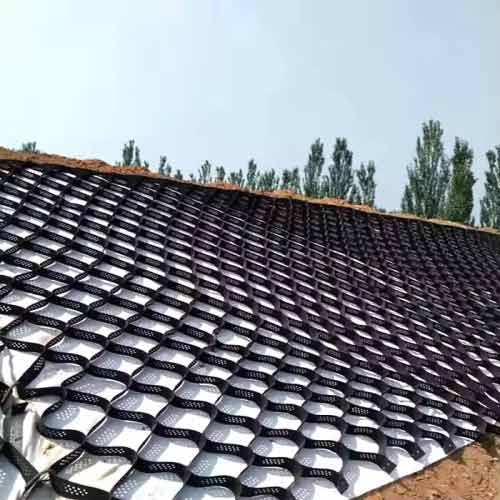
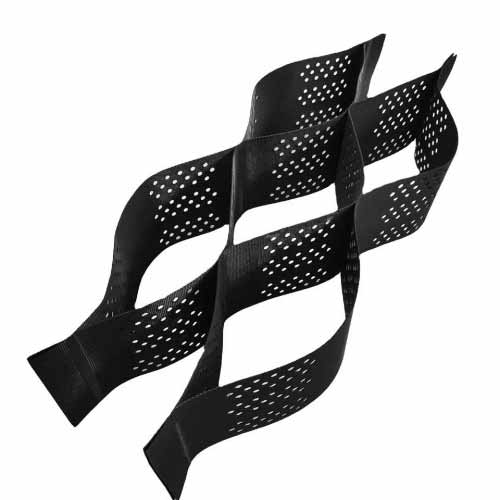
Geocells, also known as cellular confinement systems, are three-dimensional
honeycomb-like structures made from polymer strips. They are widely used in soil
stabilization, load support, and earth retention. While their mechanical
benefits in construction are well-documented, their environmental benefits are
equally significant. Geocells offer a sustainable approach to ground improvement
that reduces the need for virgin aggregate and minimizes the long-term
ecological footprint of infrastructure projects.
One of the most profound environmental benefits of geocells is their
ability to reduce the consumption of construction aggregates. In road
construction, a layer of infilled geocells can replace a substantial thickness
of aggregate base course. This means that less gravel, sand, or crushed stone
needs to be quarried and transported to the site. By reducing the demand for
these virgin materials, geocells lower the carbon footprint associated with
mining and hauling. Furthermore, they often allow for the use of on-site or
recycled materials as infill, such as sand or demolition waste, promoting
circular economy principles in construction.
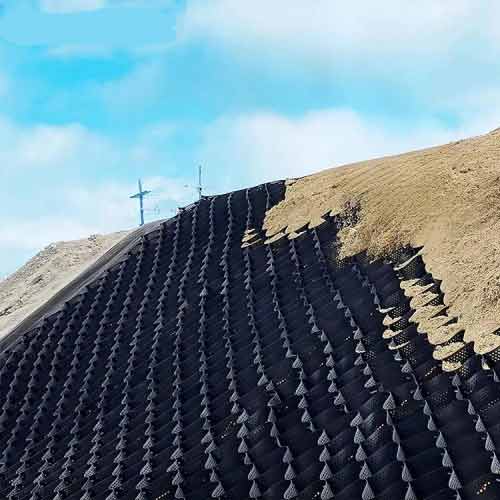
Geocells also play a vital role in erosion control and vegetation
establishment, which are key to ecosystem health. When used on slopes, the cells
trap topsoil and prevent runoff from washing away seeds and nutrients. This
creates a stable environment that promotes rapid and dense vegetation growth.
The presence of vegetation not only prevents further erosion but also
contributes to carbon sequestration. By turning a potentially barren slope into
a green landscape, geocells actively enhance the local ecology and
biodiversity.
In permeable pavement applications, geocells contribute to better
stormwater management. By providing a structure that supports a gravel or grass
surface, they allow rainwater to infiltrate the ground rather than creating
runoff. This reduces the burden on municipal storm sewers and prevents the
pollution of waterways with oil and heavy metals washed from impervious
surfaces. The replenishment of groundwater tables is a critical environmental
benefit, particularly in urban areas facing water scarcity issues. Geocells thus
serve as a tool for low-impact development (LID).
In conclusion, geocells represent a green technology that aligns
construction needs with environmental stewardship. Their ability to reduce
aggregate use, support vegetation, and manage stormwater makes them an excellent
choice for sustainable engineering projects. By integrating geocells into
infrastructure, engineers and developers can achieve the necessary structural
performance while actively protecting and restoring the environment. As the
industry moves towards more sustainable practices, geocells stand out as a
practical solution for responsible ground improvement.
geocell slope geocell application geocell retaining wall geocell on slope
Previous article:
Geocell Ground Reinforcement: Three-Dimensional Soil Stabilization
Next article:
Geocell Cellular Structure: Engineering Design and Functions