Product details description
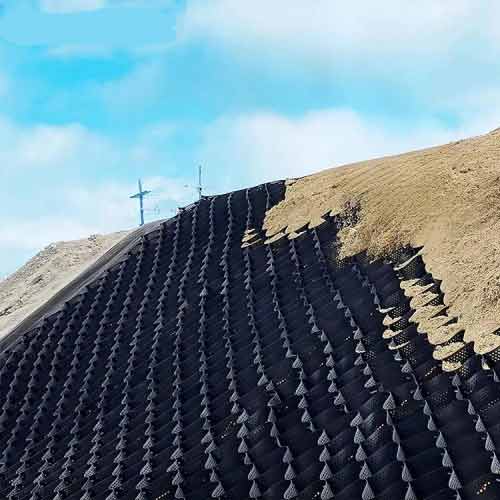
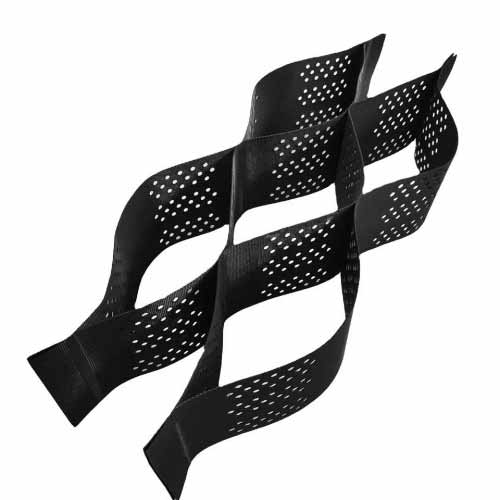
Geocells, three-dimensional honeycomb-like structures made from polymeric
strips, are increasingly used for slope protection, channel lining, and load
support. Their environmental benefits extend far beyond basic erosion control,
offering a sustainable and ecologically friendly alternative to traditional hard
armor methods like concrete or riprap.
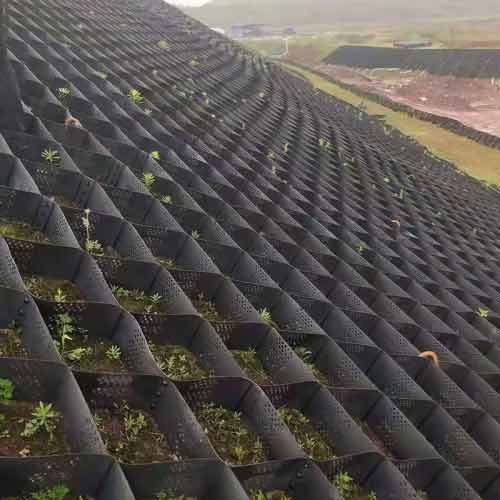
The most significant environmental advantage is the promotion of vegetation
establishment. When filled with soil and seeded, geocells provide a stable,
confined growing medium. The cellular structure protects young plants from
surface erosion and runoff while retaining moisture and nutrients near the root
zone. This leads to the development of a robust vegetative cover that
permanently stabilizes the slope through root reinforcement. This bioengineering
approach restores natural habitat, increases biodiversity, improves aesthetics,
and sequesters carbon, creating a living slope system rather than a sterile,
engineered surface.
Geocells facilitate the use of local, on-site fill materials. Unlike
concrete, which requires manufactured cement and imported aggregate, geocells
can be filled with locally available soil, sand, or recycled construction
materials. This drastically reduces the carbon footprint associated with
material extraction, processing, and long-distance transportation. It also
minimizes site disturbance from quarrying and lowers project costs. The system
is inherently resource-efficient, requiring less raw material volume than a
comparably thick layer of loose riprap to achieve the same stability.
From a hydrological perspective, geocell systems are permeable. They allow
for natural infiltration of rainwater into the slope, recharging groundwater and
reducing surface runoff that can cause downstream flooding and erosion. This
contrasts with impermeable concrete slabs or asphalt, which increase peak runoff
rates and contribute to the urban heat island effect. The permeability also
prevents the build-up of hydrostatic pressure behind the slope protection layer,
a common cause of failure in rigid systems.
The installation process itself is less environmentally disruptive.
Geocells are lightweight and modular, requiring minimal heavy equipment for
placement compared to the machinery needed to pour concrete or place large
riprap. This reduces fuel consumption, soil compaction, and overall site
degradation. Furthermore, geocells are typically made from high-density
polyethylene (HDPE), which is a durable, recyclable polymer. While concerns
about plastics in the environment exist, the long design life and stability of
geocells mean they are not a source of loose litter or microplastics during
their service life. In summary, geocells represent a green infrastructure
solution that effectively stabilizes slopes while enhancing ecological function
and reducing the environmental impact of construction activities.
geocell slope geocell application geocell retaining wall geocell on slope
Previous article:
Reinforcing Infrastructure with Geocell HDPE Technology
Next article:
Geocell Ground Reinforcement: Three-Dimensional Soil Stabilization