Product details description
Geocell technology has emerged as a powerful solution for pavement
reinforcement in road construction, offering a three-dimensional cellular
confinement system that dramatically improves the load distribution
characteristics of unstable soils and reduces the material requirements for
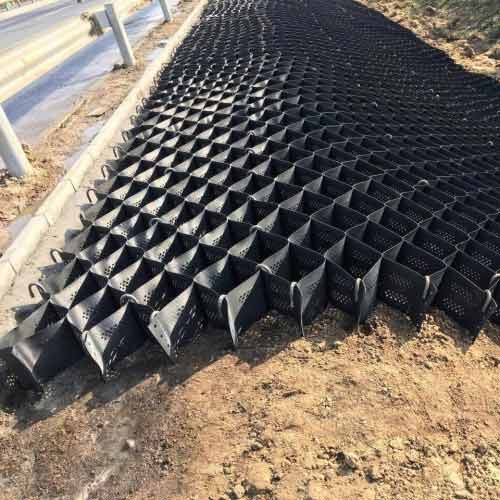
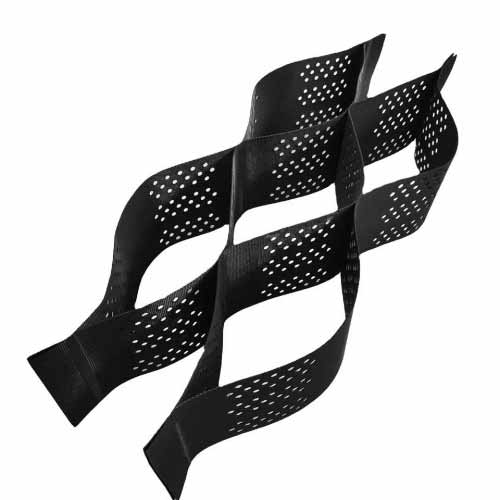
pavement construction. Geocells are three-dimensional polymer structures,
typically manufactured from high-density polyethylene or other durable synthetic
materials, that are expanded on-site to create a honeycomb-like cellular
network. When filled with granular materials such as sand, gravel, or recycled
aggregate, geocells create a composite system with significantly improved
load-bearing capacity compared to unreinforced soil. This reinforcement
mechanism has found widespread application in road construction, particularly
for subgrade stabilization, base reinforcement, and the construction of access
roads over soft or marginal soils where conventional construction methods would
prove expensive or ineffective.
The load distribution mechanism of geocell reinforcement operates through a
combination of lateral confinement, stress distribution, and membrane action
that collectively enhance the performance of granular fills under traffic
loading. The three-dimensional structure of geocells confines the fill material,
preventing lateral spreading under load and creating a stiffened platform that
distributes loads over a wider area of the underlying subgrade. The interaction
between the geocell walls and the fill material generates frictional forces that
mobilize the shear strength of the confined material, effectively increasing the
apparent stiffness and load-bearing capacity of the reinforced section. The
membrane action of the geocell system provides additional support at the edges
of loaded areas, reducing tensile stresses at the subgrade surface that would
otherwise contribute to permanent deformation and rutting. The effectiveness of
geocell reinforcement increases with the depth of the cellular structure, with
thicker geocells providing greater confinement and improved performance under
heavy loads.
Applications of geocell reinforcement in road construction span the full
range of pavement layers, from subgrade stabilization at the bottom of the
pavement structure to base reinforcement near the surface. Subgrade applications
utilize geocells to improve the bearing capacity of weak soils, enabling the
construction of pavements over soft clays, organic soils, or expansive clays
that would otherwise require expensive soil replacement or chemical
stabilization. Base reinforcement applications place geocell-confined aggregate
above the subgrade, creating a stiffened working platform that reduces the
stress transmitted to the underlying soil while allowing reduced aggregate
thickness compared to conventional unreinforced construction. Geocell
reinforcement is particularly valuable for access roads, temporary construction
roads, and haul roads where heavy equipment loads and repeated trafficking
create demands that exceed the capacity of conventional unpaved surfaces. The
adaptability of geocell systems to various site conditions and loading
requirements has made them popular solutions for projects ranging from rural
development roads to industrial facility access routes.
The installation of geocell reinforcement systems requires attention to
site preparation, geocell deployment, and fill placement procedures that ensure
proper confinement and optimal performance. Site preparation typically includes
clearing and grading to establish a smooth, stable surface for geocell
installation, with additional subgrade improvement measures implemented as
required by soil conditions. Geocell panels are expanded from their folded
shipping configuration and anchored in place using pins, bars, or soil backfill
at the edges and intermediate locations. The expansion of geocell panels to the
specified cell dimensions must achieve uniform cell sizes throughout the
installation to ensure consistent performance across the reinforced area. Fill
placement proceeds in layers, with aggregate placed within cells and compacted
to achieve the specified density for the reinforced section. The quality of fill
placement and compaction directly influences the performance of the completed
geocell-reinforced pavement, making proper construction practices essential for
achieving the intended benefits of geocell reinforcement.
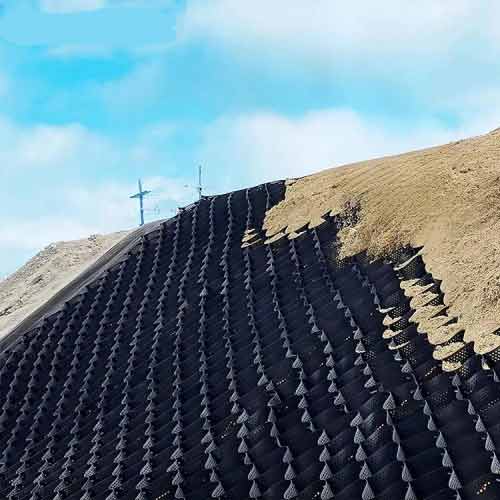
geocell slope geocell application geocell retaining wall geocell on slope
Previous article:
Cost-Effectiveness of Geocell in Large-Scale Infrastructure Projects
Next article:
Expandable 3D Geocell for Easy Installation & Cost Savings