Product details description
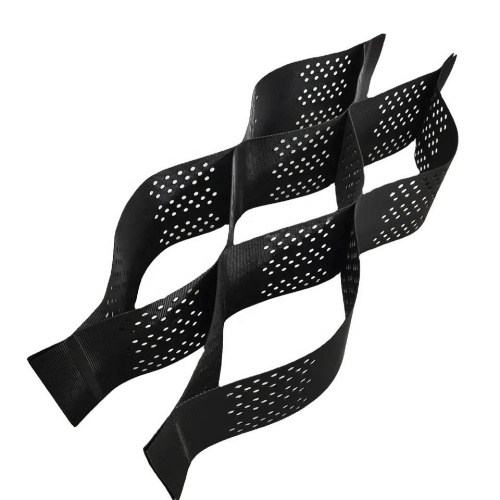
Geocell drainage systems are three-dimensional cellular confinement
structures made from high-density polyethylene (HDPE) or other polymeric
materials, designed to manage water flow and enhance permeability in a variety
of civil engineering and environmental applications. By forming a honeycomb-like
matrix over soil or subbase, geocells confine infill material, prevent lateral
migration of fines, and create stable pathways for water infiltration and
lateral drainage, addressing water accumulation and stability issues in roads,
embankments, and green infrastructure.
The core mechanism of a geocell system lies in its ability to reinforce
soil while maintaining high permeability. When filled with gravel or sandy
material, the cells act as rigid beams that distribute vertical and horizontal
loads, reducing differential settlement. Simultaneously, the interconnected
voids between cells allow water to permeate downward and move laterally toward
designated outlets. This dual function of load support and drainage makes
geocells particularly effective in areas prone to waterlogging or where
traditional free-draining layers are impractical.
Design parameters critical to performance include cell depth, wall
thickness, aperture size, and material stiffness. Deeper cells provide greater
confinement and load distribution, while thicker walls resist puncture and
deformation under traffic loads. Aperture size must match the gradation of the
infill to prevent loss of material and maintain hydraulic conductivity. In high
rainfall or high water table conditions, engineers may orient geocells to
channel water toward collection systems or integrate them with perforated pipes
for accelerated removal.
Installation begins with subgrade preparation—leveling and compacting the
soil to prevent uneven settling. A geotextile layer is placed over the surface
to separate the subgrade from the infill and prevent intermixing of fine
particles. Geocells are then expanded and anchored, ensuring full contact with
the geotextile. Infill material is carefully placed and compacted in layers to
achieve the designed density. Proper seaming of adjacent geocell strips prevents
gaps that could compromise drainage uniformity.
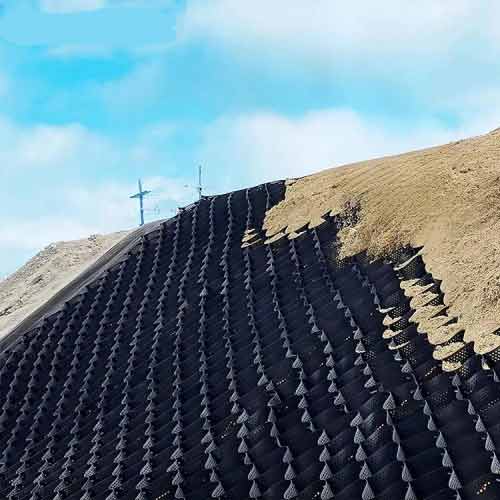
Geocell drainage systems offer sustainable solutions for managing water in
both structural and landscape projects. They reduce the need for extensive
excavation and additional drainage layers, lowering construction costs and
environmental impact. By promoting vertical infiltration and lateral flow, they
mitigate surface runoff, control erosion, and enhance vegetation growth in green
roofs and slopes. Their durability, resistance to chemical and biological
degradation, and ease of installation make geocells a versatile tool in modern
water management strategies.
geocell slope geocell application geocell retaining wall geocell on slope
Previous article:
The details about using geocell is as below
Next article:
The Economic Benefits of Using Geocell in Construction