Product details description
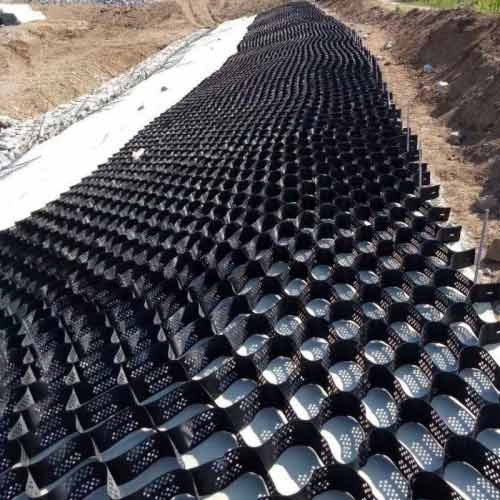
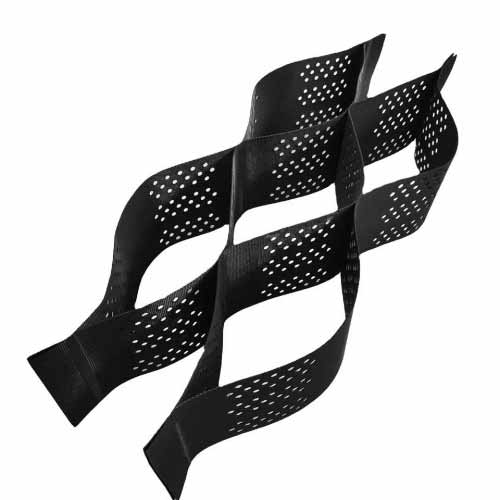
Geocells are three-dimensional honeycomb-like structures made of
high-density polyethylene (HDPE) strips, ultrasonically welded together to form
expandable cells. When filled with soil, aggregate, or concrete, they create a
rigid, semi-rigid mattress that distributes loads over a wide area,
significantly improving the bearing capacity of weak subgrades. The mechanism
relies on the "lateral confinement" principle: the geocell walls restrict the
horizontal movement of the infill material, increasing the friction angle and
stiffness of the composite system. This transforms a soft, unstable soil layer
into a stable platform capable of supporting heavy traffic, slopes, or retaining
walls.
The structural performance of geocells is superior to traditional granular
layers in specific applications. For example, in road construction over soft
clay, a geocell layer can reduce the required aggregate thickness by 50%
compared to a conventional design, as the load is spread laterally rather than
transmitted vertically to the subgrade. This not only saves material costs but
also reduces the carbon footprint associated with quarrying and transporting
stone. The stiffness of the geocell system allows it to bridge over localized
weak spots (voids) in the subgrade, preventing differential settlement that
causes pavement cracking.
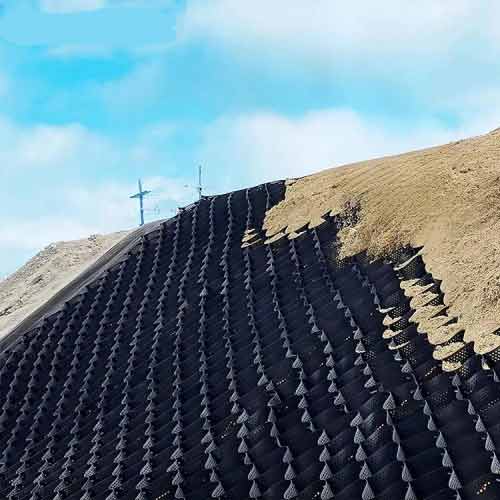
One of the most significant benefits is the ability to stabilize steep
slopes and prevent erosion. On a 1:1 (45-degree) slope, a geocell system can be
vegetated to create a "green wall." The cells hold the topsoil and seeds in
place, allowing roots to anchor deeply into the slope while the geocell provides
tensile strength to resist gravitational forces. This is particularly useful in
highway embankments and riverbank protection where conventional riprap might
slide. The flexibility of the geocell allows it to accommodate minor ground
movements without catastrophic failure, unlike rigid concrete structures.
Installation of geocells is rapid and labor-efficient. The cells are
shipped in collapsed bundles, expanded on-site, and staked into place using
U-nails or rebar. No heavy compaction equipment is needed for the infill
material in many cases, as the confinement provided by the cells achieves high
density with standard light compaction. This makes geocells ideal for remote
sites with difficult access or environmentally sensitive areas where heavy
machinery is prohibited. The speed of installation allows roads to be opened to
traffic almost immediately after construction, minimizing downtime.
Durability is a key selling point. HDPE geocells are chemically inert,
resistant to biological degradation, and stable across a wide temperature range
(-50°C to +60°C). They are resistant to hydrocarbons and salts, making them
suitable for industrial yards, landfills, and coastal applications. UV
stabilizers are added during manufacturing to prevent photodegradation, ensuring
a design life of 50-75 years even when exposed. Unlike steel gabions, geocells
do not corrode, eliminating the risk of structural weakening over time or
staining of the surrounding environment with rust.
Cost-benefit analysis consistently favors geocells in challenging ground
conditions. While the material cost per square meter may be higher than a simple
geotextile, the reduction in excavation depth (removing poor soil), the decrease
in aggregate requirement, and the elimination of concrete pouring for shallow
foundations result in substantial overall savings. In retaining wall
applications, geocell facing systems are often 30-40% cheaper than segmental
retaining walls (SRW) and require no footing, simplifying the construction
sequence. Their versatility—working with on-site soil, sand, or recycled
concrete—further enhances their economic appeal in sustainable construction
projects.
geocell slope geocell application geocell retaining wall geocell on slope
Previous article:
The Role of Geocell in Vegetation Growth on Steep Slopes
Next article:
Geocell for Channel & Reservoir Slope Protection