Sustainable Slope Protection via Geocell Slope Stabilization
Release time:2026-02-10 Click:23
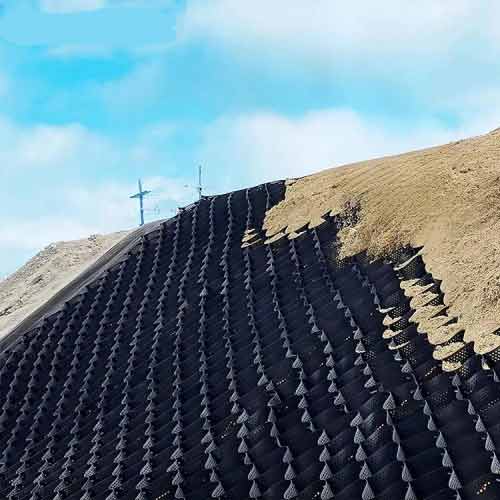
Slope instability is a common challenge in construction and environmental restoration, but geocell slope stabilization provides an effective and eco-friendly solution. Geocells are three-dimensional honeycomb structures made from polymer materials, which confine soil and aggregate to create reinforced layers. This technique has gained popularity for its ability to prevent erosion, support vegetation, and enhance load-bearing capacity on steep gradients.
Geocells are typically manufactured from high-density polyethylene (HDPE) or other durable polymers, designed to expand when deployed on slopes. The cellular compartments are filled with local soil, gravel, or concrete, depending on the required strength. Their flexible nature allows them to conform to irregular surfaces, making them suitable for diverse terrains, from highway embankments to mine slopes. UV resistance and chemical stability ensure long-term performance in outdoor conditions.
Applications of geocell slope stabilization are widespread in civil engineering. On roadways, they reinforce cut-and-fill slopes, reducing landslide risks and maintenance costs. In riverbanks, they stabilize soil while allowing water permeability, protecting aquatic ecosystems. For landfill covers, geocells support vegetative growth, minimizing erosion and aesthetic impact. Their use in military and disaster zones highlights versatility, providing quick stabilization after natural events.
The benefits of geocell slope stabilization are substantial. They improve soil shear strength by confinement, preventing lateral movement and settling. Environmentally, they reduce the need for heavy machinery and imported materials, lowering carbon footprints. Vegetation can thrive within the cells, fostering root systems that further stabilize slopes. Cost-wise, geocells offer a lightweight alternative to traditional retaining walls, saving on transportation and installation expenses.
Installation involves site preparation, including grading and compacting the slope surface. Geocell panels are anchored at the top and unfolded downslope, secured with stakes or pins. Filling is done manually or with equipment, ensuring even distribution to avoid voids. In high-stress areas, geogrids may be combined with geocells for added reinforcement. Post-installation, monitoring for erosion or deformation ensures durability, with occasional refilling or repair as needed.
Advancements in geocell technology focus on biodegradable materials and hybrid systems for extreme climates. As urbanization expands into hilly regions, geocell slope stabilization will be crucial for sustainable development. Integration with smart sensors could enable real-time stability monitoring. By offering a balance between engineering rigor and ecological harmony, geocells represent a forward-thinking approach to slope management, safeguarding infrastructure and natural landscapes alike.
Previous article:Stabilizing Soil on Steep Slopes Using Geocell Membrane
Next article:Transform Unstable Soil into a Structural Layer: Load-Bearing Geocell for Slopes
Hot products
Mobile: +86 13253222720
Email:metalproducts2026@163.com
Email:2671275026@qq.com