Types of geonets
Release time:2025-09-27 Click:36
There are several types of geonets available, each designed to suit specific geotechnical or environmental applications. Here are some common types of geonets:
Bi-Planar Geonets: They have a three-dimensional structure consisting of two sets of parallel ribs connected by diagonal members. This design provides high transmissivity in both machine and cross-machine directions, making it effective for drainage and filtration applications.
Tri-Planar Geonets: They have a three-dimensional structure with three sets of parallel ribs arranged in different directions. This design enhances the geonet’s isotropic hydraulic properties, allowing for high water flow in multiple directions.
Composite Geonets: Composite geonets combine the functionalities of different geosynthetic materials. For example, they may consist of a geonet bonded to a nonwoven geotextile or geomembrane. Composite geonets provide both drainage and filtration capabilities in a single product.
Geocomposite Drainage Geonets: Geocomposite drainage geonets combine a geonet with a nonwoven geotextile. The geonet provides structural support and drainage capacity, while the geotextile acts as a filter to prevent soil particles from clogging the geonet. This type of geonet is commonly used in landfill leachate collection systems, subsurface drainage, and retaining wall drainage applications.
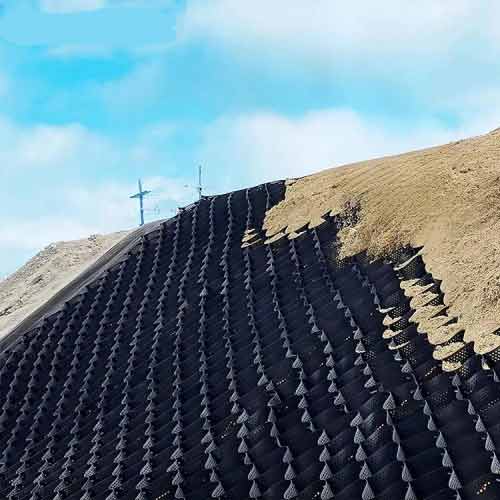
Erosion Control Geonets: They are specifically designed to control soil erosion on slopes, embankments, or riverbanks. These geonets have a thicker and more robust structure to provide stabilization and prevent erosion. They often have a high tensile strength and are resistant to UV radiation and environmental degradation.
High-Flow Geonets: High-flow geonets are designed to accommodate high volumes of water flow while maintaining effective filtration. They have larger openings in their grid structure, allowing for rapid water movement and reducing the risk of clogging.
Previous article:Elevator pit waterproofing importance
Next article:Benefits of geonets
Hot products
Mobile: +86 13253222720
Email:metalproducts2026@163.com
Email:2671275026@qq.com