Stabilizing Steep Embankments with Cellular Confinement: geocell slope stabilization
Release time:2026-03-05 Click:12
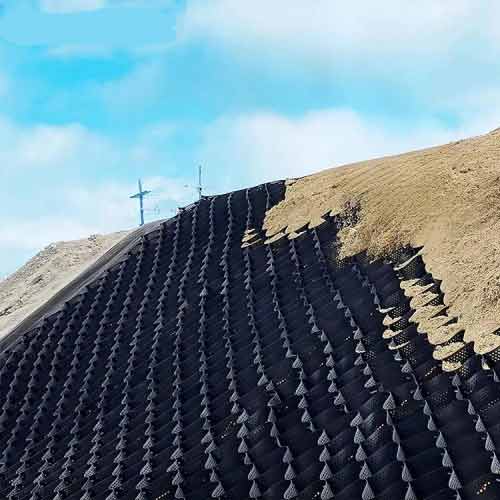
On highways, railways, and mining access roads carved into mountainsides, unstable slopes pose constant risks of landslides and erosion. Geocell slope stabilization offers an elegant, cost-effective solution by confining soil within a three-dimensional honeycomb matrix made of ultrasonically welded high-density polyethylene (HDPE) strips.
Once expanded on-site and anchored into the slope face, the geocell slope stabilization system is infilled with local soil, gravel, or even recycled aggregate. The cells distribute applied loads laterally, dramatically increasing shear resistance and preventing surface sloughing. Vegetation can be seeded into the infill, creating a living armor that further binds the soil with roots while enhancing aesthetics.
Performance hinges on cell height (typically 50–200 mm), seam strength, and UV resistance. HDPE geocells withstand temperatures from -60°C to +60°C and resist chemical degradation for 50+ years. Unlike gabions or concrete panels, they conform to irregular terrain without extensive grading, reducing earthwork costs by up to 40%.
Design considerations include slope angle (up to 70° possible), drainage integration, and connection to underlying geogrids for deep-seated stability. Hydraulic modeling ensures the system can handle 100-year storm events. In arid regions, geocells also reduce wind erosion by trapping fine particles.
In essence, geocell slope stabilization transforms loose earth into a coherent, resilient structure. It merges geosynthetic innovation with ecological sensitivity—proving that the future of slope engineering is cellular, not concrete.
Previous article:Stabilizes Soil & Prevents Washout – Geocell
Next article:High-Performance Drainage Cell Systems for Green Infrastructure
Hot products
Mobile: +86 13253222720
Email:metalproducts2026@163.com
Email:2671275026@qq.com