Ground Stabilization Techniques and Best Practices for Geocell Installation in Construction and Environmental Applications
Release time:2026-02-25 Click:13
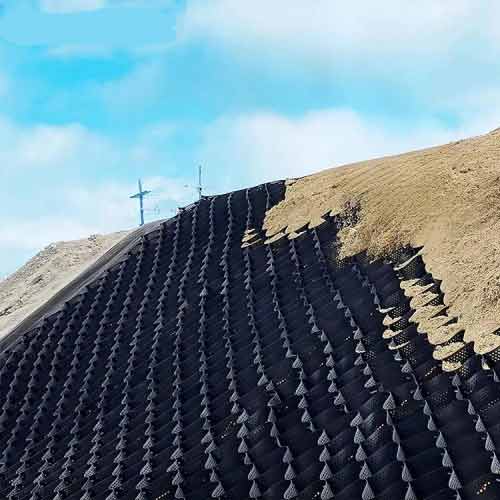
Geocell installation has become a widely adopted ground stabilization technology in construction, transportation, and environmental applications, providing three-dimensional reinforcement that significantly improves the performance of weak soils, aggregates, and paved surfaces under applied loads. The fundamental mechanism of geocell reinforcement involves confining fill materials within a honeycomb-like cellular structure, preventing lateral movement and distributing applied loads across a wider area than would be possible with unconfined materials. This confinement effect dramatically increases the effective bearing capacity of the soil-aggregate-geocell composite system while reducing vertical stress on underlying weak soils. Geocell systems are manufactured from high-density polyethylene or other durable polymers, with the material extruded or welded into expandable panels that form the three-dimensional cell structure when expanded and filled with aggregate or soil during installation.
The engineering design of geocell installation systems requires consideration of site conditions, load requirements, and material properties that determine the appropriate geocell configuration and installation procedures for each application. Site investigation provides essential information on subgrade soil conditions, including soil type, density, moisture conditions, and bearing capacity, which influence the required depth of geocell confinement and the specifications for fill materials. Load requirements, including both static loads from structures or stored materials and dynamic loads from vehicle traffic, determine the cell depth, wall thickness, and overall geocell system dimensions required for adequate performance. The selection of geocell material specifications, including polymer type, cell wall thickness, and seam strength, depends on the expected service life, environmental exposure conditions, and chemical compatibility requirements of the specific application. Design methodologies and specification guidelines established by industry organizations and regulatory agencies provide frameworks for determining appropriate geocell system parameters for various applications.
The construction and installation procedures for geocell systems significantly influence the in-situ performance and long-term effectiveness of these ground stabilization solutions. Site preparation involves clearing and grading the subgrade surface, addressing soft or unstable soil conditions, and ensuring adequate drainage to prevent water accumulation within or beneath the geocell system. Geocell panel deployment involves expanding the collapsed panels to their designed dimensions and anchoring them in position using earth anchors, pins, or temporary ballasting. The filling operation, typically performed with aggregate or suitable soil material, must proceed systematically to ensure proper cell filling and avoid deformation of the geocell structure. Compaction of the fill material within the cells ensures maximum density and load distribution performance. Final grading and surface preparation complete the installation, preparing the geocell-reinforced area for its intended use. When installed according to proper procedures and specifications, geocell systems provide durable, cost-effective ground stabilization that extends service life and reduces maintenance requirements for paved surfaces, retaining structures, and earthworks in demanding construction and environmental applications.
Previous article:Enhanced Soil Reinforcement: Geocell Membrane for Civil Engineering
Next article:Streamlining Construction and Erosion Control with Innovative Cement Blanket
Hot products
Mobile: +86 13253222720
Email:metalproducts2026@163.com
Email:2671275026@qq.com