Slope Stabilization: Geocell Erosion Control Systems
Release time:2026-02-18 Click:11
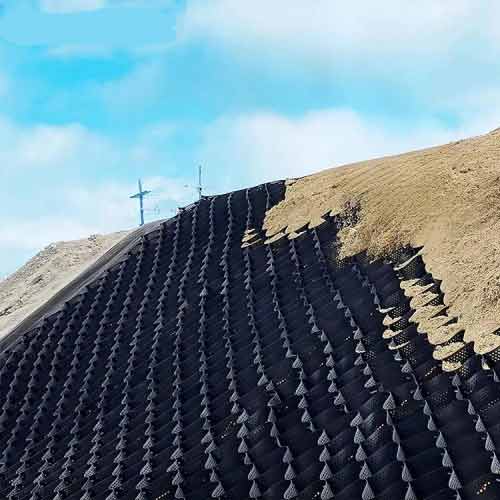
Geocell erosion control is a sophisticated ground engineering technique that uses a three-dimensional honeycomb-like structure to confine soil and prevent surface erosion. Made from high-density polyethylene (HDPE) or polyester, these cells are expanded on-site and filled with aggregate, topsoil, or concrete, creating a composite material with high shear strength and resistance to water flow. Unlike traditional riprap or concrete mats, a geocell system is flexible and permeable, allowing vegetation to grow through the cells while the structure itself protects the soil from being washed away. This makes it ideal for steep slopes, riverbanks, channel linings, and roadside embankments where hydraulic forces are high. The cellular confinement system distributes loads over a wide area, reducing the pressure on the underlying subgrade and preventing the initiation of rills and gullies.
The manufacturing of geocell erosion control systems involves ultrasonic welding of polymer strips into a grid of interconnected cells. The height of the cell (typically 50-200mm) and the size of the aperture determine the system's stability and suitability for different applications. For erosion control on slopes, the cells are often perforated to allow root penetration and water drainage. The material is treated with UV stabilizers and antioxidants to withstand decades of sun exposure and freeze-thaw cycles. In high-stress environments, such as military airfields or heavy haul roads, the geocells are filled with concrete to create a rigid, pavement-like surface that resists rutting and cracking. The lightweight nature of the polymer (weighing only 1-2 kg/m2) makes it easy to transport and install in remote or environmentally sensitive areas where heavy machinery is restricted.
Installation of a geocell erosion control system is a rapid process that requires minimal site preparation. The slope is graded and compacted, and a geotextile fabric is often laid down first to separate the geocell from the subgrade and prevent mixing of materials. The geocell panels are then rolled out and anchored using steel stakes or U-nails at the top of the slope. The cells are expanded to their full volume, creating a honeycomb structure that conforms to the ground's contours. Filling is done using a skid-steer loader or manually; the infill material is compacted in layers to lock the cells in place. For vegetative applications, a layer of topsoil is added on top, and seeds or sod are planted directly into the cells. The immediate stabilization allows for vegetation establishment even on slopes as steep as 1:1, which would otherwise be impossible to revegetate.
Maintenance of a geocell erosion control system is exceptionally low, primarily involving the inspection of the vegetation cover. Once the roots establish, they bind the soil and the geocell into a monolithic matrix that is stronger than the surrounding undisturbed ground. However, in the initial establishment phase, the site may need irrigation and protection from grazing animals. If the geocell is exposed (without vegetation), it should be inspected for UV degradation or physical damage from debris. In aquatic environments, such as spillways, the cells must be checked for scour at the toe. Because the system is permeable, it does not suffer from the hydrostatic pressure buildup that destroys solid retaining walls. Repairs are simple: damaged sections can be patched with new geocell strips and refilled, often without excavating the surrounding area.
The environmental and economic advantages of geocell erosion control are driving its widespread adoption. It is often 30-50% cheaper than concrete solutions and reduces construction time by eliminating the need for curing. By enabling vegetation growth, it restores the natural aesthetic of the landscape and provides habitat for wildlife, unlike gray infrastructure which creates visual blight. In terms of sustainability, the use of recycled polymers in geocell manufacturing reduces the carbon footprint. The system also acts as a carbon sink when vegetated. As extreme weather events become more common, the ability of geocells to absorb energy and adapt to ground movement makes them a critical tool in climate resilience strategies. They represent a shift from "fighting nature" to "working with nature," using mechanical confinement to empower biological processes to heal the land.
Previous article:Stabilize Surfaces Efficiently with Gravel Grid
Next article:Retaining Wall Support Geocell: Advanced Soil Stabilization Technology
Hot products
Mobile: +86 13253222720
Email:metalproducts2026@163.com
Email:2671275026@qq.com