Vegetation Geocell for Erosion Control
Release time:2026-01-14 Click:19
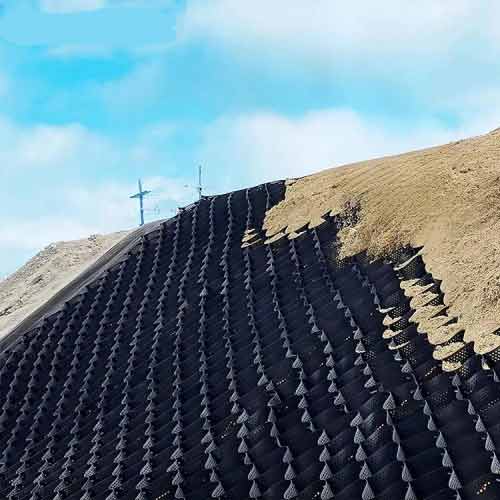
Vegetation geocell systems represent a sophisticated and eco-engineering approach to erosion control, combining three-dimensional polymeric honeycomb confinement with live vegetation to create a durable, living protective layer. The system begins with the installation of expandable geocell panels, typically made from high-density polyethylene (HDPE) strips ultrasonically welded into a cellular network. These panels are anchored to the slope or channel bed using stakes or pins and then expanded to form a rigid, interconnected grid of cells. This cellular structure is the foundational framework that provides immediate physical confinement and surface stabilization, preventing soil particle movement from the moment of installation.
The true innovation lies in the filling and vegetating process. Instead of being filled solely with aggregate (like gravel), the cells are filled with a growth medium—a blend of topsoil, compost, fertilizer, and seeds tailored to the local climate and site conditions. This transforms the geocell from a simple mechanical restraint into a biotechnical system. The cell walls prevent the growth medium from being washed away by rain or wind, creating ideal, protected micro-environments for seed germination and root development. As the vegetation establishes, its roots penetrate through the cell walls and into the underlying soil, creating a deep, interlocking mechanical reinforcement that binds the entire slope together far more effectively than either geocells or vegetation alone.
This synergy offers superior, long-term erosion control with significant ecological benefits. The living vegetation provides continuous surface cover that intercepts rainfall, reduces surface runoff velocity, and improves water infiltration. The root system increases soil shear strength and absorbs excess water. Over time, the geocell material, often UV-stabilized, provides long-term support while the vegetation matures and takes over the primary structural role. The result is a resilient, self-sustaining, and visually natural slope that enhances biodiversity, provides habitat, and seamlessly integrates into the landscape, unlike hard armor solutions like riprap or concrete.
Vegetation geocells are exceptionally versatile for challenging sites. They are highly effective on steep slopes, roadside embankments, riverbanks, shorelines, and in drainage channels where establishing vegetation by conventional means is difficult. Their flexibility allows them to conform to uneven terrain. The system is also highly effective for rehabilitating areas disturbed by construction or mining. By providing instant stabilization and a conducive environment for plant growth, vegetation geocells accelerate ecological recovery, reduce sediment pollution in waterways, and offer a cost-effective, sustainable alternative to traditional erosion control methods, delivering permanent protection through a living, growing matrix.
Previous article:Optimizing Driveway Performance Through Geocell Engineering
Next article:Optimizing Land Use with Drainage Cell
Hot products
Mobile: +86 13253222720
Email:metalproducts2026@163.com
Email:2671275026@qq.com